

To the consultation bureau
Together with you, we will discuss when you should come to the child health clinic with your child and what you need from us.
Appointments at the consultation center
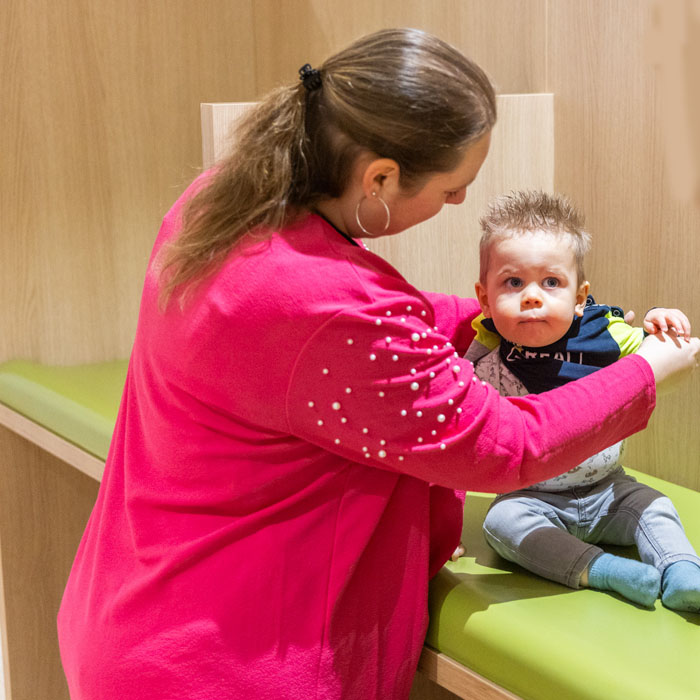
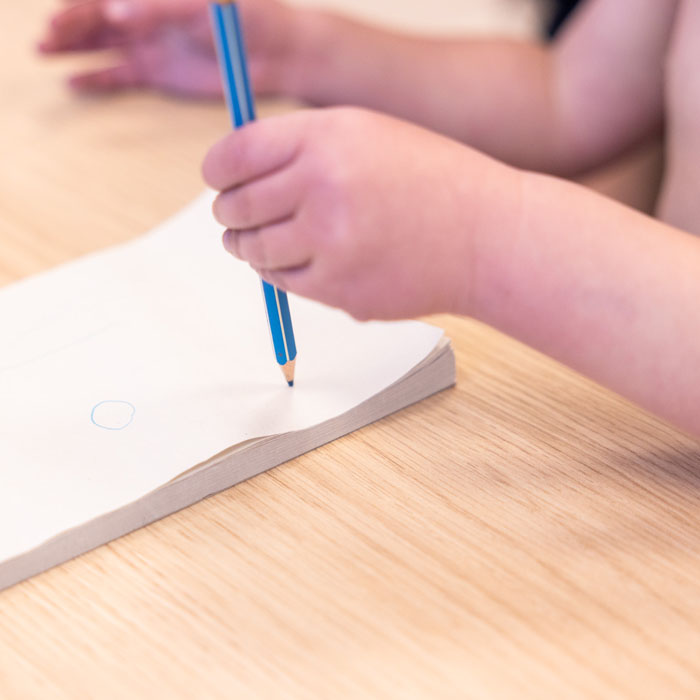
Just like in the first year, we weigh and measure your child at every visit. During the conversation with the youth doctor, nurse specialist or youth nurse, we play games with your child to monitor motor development.
During every visit, we also assess your child's language development. From 14 months, we look at what your child can say. For example, “Bah” for something they find dirty, or “die” when pointing at something. From the age of 2, we test which words your child already says. We also test whether your child understands what we say. This allows us to see if your child's language development is progressing well. If not, we will discuss with you the options to help your child with this development. Of course, there is still plenty of opportunity to ask questions.
We also perform a physical examination during an appointment. Read on to see exactly what we do during this phase. Is your child following the national vaccination program? If so, we combine the vaccination appointments with your appointments with us.
Our offer is voluntary
As a parent, you can choose whether you want to use our care. Our care is voluntary and your child is our priority. If you choose not to use our offer, we will look together at how we can follow up on this.
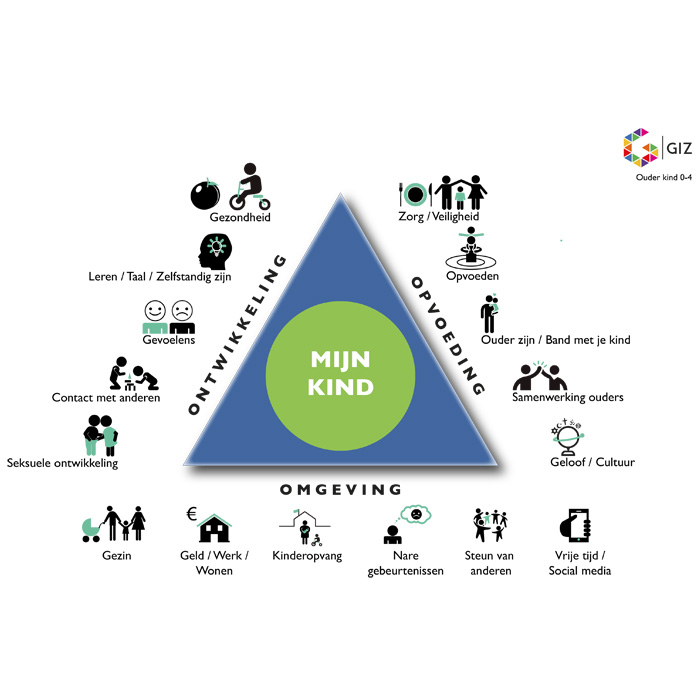
In this image, you can see the topics you can discuss with the professionals at Youth Health Care. Together, we will discuss what is going well, where we might be able to support you, and what suits you, your child, and your family best.
Physical examination
At the child health clinic we sometimes also do a physical examination.
Eye exam
During your visit to the child health clinic, we will check whether your child can follow an object with both eyes.
And when your child is between 3 and 4 years old, we perform an eye test for the first time. Your child will be given special glasses to wear, with one eye covered. Next, we have your child look at a chart facing in different directions. Your child must then tell us what they see. This way, we know if they see well with both eyes.
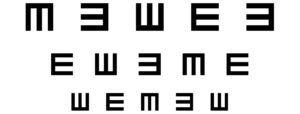
Does your child have poor vision? We will often repeat the test a few months later. Does your child still have poor vision? We will refer you to an ophthalmologist. They can see whether your child needs glasses, for example.
Cardiac examination
Until your child is 14 months old, we examine the heart. This way we can see if it has a congenital heart defect. It is important that we discover this in time. Then doctors in the hospital can start treatment as soon as possible.
We examine your child's heart by listening to it. We do this with a stethoscope. If we hear anything suspicious about the heart, we will refer you to the hospital.
If your child is older than 14 months, the examination is no longer necessary. Then we know that there is no congenital heart defect.
Hip examination
Until your child can walk properly, we will examine the hips at every visit. This way we can see if there is hip dysplasia. With hip dysplasia, the hip is not quite the right shape. This means that the top of the bone of the thigh does not sit neatly in the hip joint. As a result, your child's hip can easily dislocate or wear out more quickly. This can cause your child to suffer when he or she starts walking. But if we detect it early, doctors can treat it well. Your child will not suffer from it.
Sometimes we discover during the examination that the hip is already dislocated. Doctors in the hospital can also treat this well if we discover it early.
Eye examination and eye test
During your visit to the child health clinic, we will check whether your child can follow an object with both eyes.
And when your child is between 3 and 4 years old, we perform an eye test for the first time. Your child will be given special glasses to wear, with one eye covered. Next, we have your child look at a chart facing in different directions. Your child must then tell us what they see. This way, we know if they see well with both eyes.
Does your child have poor vision? We will often repeat the test a few months later. Does your child still have poor vision? We will refer you to an ophthalmologist. They can see whether your child needs glasses, for example.
Cardiac examination
Until your child is 14 months old, we examine the heart. This way we can see if it has a congenital heart defect. It is important that we discover this in time. Then doctors in the hospital can start treatment as soon as possible.
We examine your child's heart by listening to it. We do this with a stethoscope. If we hear anything suspicious about the heart, we will refer you to the hospital.
If your child is older than 14 months, the examination is no longer necessary. Then we know that there is no congenital heart defect.
Hip examination
Until your child can walk properly, we will examine the hips at every visit. This way we can see if there is hip dysplasia. With hip dysplasia, the hip is not quite the right shape. This means that the top of the bone of the thigh does not sit neatly in the hip joint. As a result, your child's hip can easily dislocate or wear out more quickly. This can cause your child to suffer when he or she starts walking. But if we detect it early, doctors can treat it well. Your child will not suffer from it.
Sometimes we discover during the examination that the hip is already dislocated. Doctors in the hospital can also treat this well if we discover it early.
Find your consultation center
Do you have a question? Ask it via the Parent Chat!
Do you have questions about your child's health? About parenting? Or about growing up? Ask your question to the youth nurse via the Parent Chat. A national team of youth nurses is ready to answer your questions. They are available from Monday to Friday, between 8.30:17.00 AM and 20.30:XNUMX PM. On Mondays, Tuesdays, and Thursdays, you can even chat until XNUMX:XNUMX PM. Please note: We cannot access your child's records and unfortunately cannot schedule or reschedule appointments.
Please note! We cannot look into your child's file and unfortunately cannot make or change appointments.